=”robots” content=”noindex”> =”robots” content=”nofollow”> the peachie speechie

Tuesday, October 1, 2013

Multiple Choice Articulation: App Review!


If you want to spice up your articulation therapy session with an activity that will make your students giggle and snort and practice their target sounds all at the same time - this is the app for you! I recently downloaded Multiple Choice Articulation by Erik X. Raj on my iPad. After using it in the speech room, I decided to write a review with the help of my students. 

The app was $4.99 and targets /s, z, r, l, sh, ch, th/ in all word positions, so SLPs will love it. It is full of hilarious questions, so kids will love it too. 


 Once you select the sound and word position to target, you are presented with a series of "would you rather" questions. The student can read the question out loud, or press a button to hear it read to them. 

I found that sometimes these questions make the student laugh so hard that it takes them a minute to regain composure and give their answer. This question in particular caused a couple of six year old boys to almost fall out of their chair laughing: 


As the student answers the questions, they can target their sounds while working on reasoning skills and conversational turn taking at the same time. The can also press the "hear an answer" button to hear an example answer to the question. 

This app is motivating and engaging and absolutely hilarious! It sparked conversation and debates in the speech room while also sneaking in many productions of target sounds. 

Just take a look at what some of my students are saying about Multiple Choice Articulation: 

"Rats don't take baths in root beer! They take baths in puddles!" -1st Grade Student

"I had a raisin in my nose once." -2nd Grade Student 

"Can we play this again tomorrow?" -2nd Grade Student 

"These questions are silly!" -3rd Grade Student (said with a perfect /s/ sound!) 

Clearly, this app is a winner!

Monday, September 30, 2013

Flashcard Eating Monsters!

I have a couple of monsters in the speech room today! I found these precious snack cups over the weekend and bought them for my 16 month old to eat his snacks out of. Unfortunately, the silicone teeth are pretty tough and once my son stuck his hand in, he was not able to pull it back out! But of course I see opportunities for speech games in everything so instead of returning these monster cups, I brought them to live in the speech room where they can feast on Webber cards instead of my son's hand.

Here is how we played this game:

1. Stuff each monster cup with flashcards
2. Tell the students "Oh no! Monsters moved into the speech room and are eating your practice cards! Carefully pull one card out at a time and say your words as you go. If you do it very carefully, the monsters won't notice and they won't bite your hand".

My students loved the monsters! It was a quick and easy way to make regular old flashcard drills fun.


Tuesday, September 24, 2013

5W's Nonfiction Story Cards: Product Review

I am always looking for good listening comprehension activities for my students. Of course, I love reading books with them and asking comprehension questions but sometimes I don't want a whole book. Sometimes I just want a little passage with a few questions. Short passages mean I can get through several mini stories in one session or use them in RtI groups. At the beginning of the year I ordered 5W's Nonfiction Story Cards and so far I absolutely love them! 


The package comes with 20 different nonfiction stories with 3 copies of each story inside so you can pass them out and students can follow along as you read. Each story also has 5 WH questions to check for comprehension and 5 additional questions on the back targeting main idea, vocabulary, and identifying facts vs. opinions. 

One of my favorite things about these cards are the "find out more" questions. Each story has a question that requires the students to do some research of their own. For example, one of the stories is about a hippo and the "find out more" question is "How do hippos keep from getting sunburned?". This is a great opportunity to target predicting and reasoning skills. My students use the iPad to look up answers to these questions after everyone has shared their predictions. 

I have had such a great experience with these cards that I am ordering the fiction version too!

If anyone else has a listening comprehension activity that they are loving this year, tell me about it in the comments! 

Friday, September 13, 2013

When SLPs lose their voice...

What do you do if you are an SLP but you can't talk?! 


Working with kids in a public school, I knew it would only be a matter of time before I caught something. This year, it took five weeks. I got a little cold on Wednesday and by Thursday morning my voice was GONE. I put myself on vocal rest. I didn't feel bad enough to take a sick day. I had lots to do at work. I just couldn't talk!

But what about therapy? What about meetings? How does a school based SLP go about her day and do her job when she can't talk?

It caught me by surprise. I hadn't been talking too much. I wasn't that sick. I don't usually get so hoarse with a cold. So I had to scrap the lesson plans for the day and come up with something I could do with the kids that didn't involve much talking but still targeted their objectives.

While I was thinking of what to do, I wrote this message on my white board:

"Oh No! Mrs. Avren lost her  voice! We will be doing a quiet craft today"


I pulled out my stack of magazines, some scissors, glue, and construction paper. I decided I would have students cut out pictures of things that had their speech sound and take their projects home for weekend speech sound practice with their parents. 

I modified the activity slightly for the students with language goals. Some of them wrote down adjectives to describe their pictures. Some of them said a sentence about each picture using past tense verbs. My fluency students made sentences about each picture using easy onset. 

(note: The students that just couldn't do this activity were penciled in for make-up sessions next week)

I quickly typed up a little cover sheet and made an example for the kids to look at: 


Fortunately, I had just purchased a bunch of little dry erase boards at the Target dollar spot! I carried one of these around all day to communicate. (I was going to download an AAC device to my iPad and use it just for fun but I didn't have time!) 


However, many of my students cannot read. So, I used a lot of nonverbal communication as well. :) 

Overall, things went pretty smoothly! The kids loved the craft. 


I did have two IEP meetings, but I typed up a bunch of information before hand for the general education teacher to say for me as we discussed speech present levels and goals. 

I drank tea with honey throughout the day and plan on getting a lot of rest this weekend! 


Wednesday, September 11, 2013

#InstaSLP (and another freebie!)

I just joined the world of instagram and am having fun linking up with other SLPs and seeing their pictures! Speech Room News and Crazy Speech World created the #InstaSLP event this week and it has been great to see other speech rooms, activities, and crafts. Here are a few of my pics from this week:


This week I have been reading The Gruffalo with my students and matching up the rhyming words. I made some activities to accompany the book including a writing activity, a coloring activity, a following directions activity, and a rhyming match-up! These activities are FREE in my TPT store. 


Friday, August 30, 2013

Magazines in therapy! The "Highlight" of my day!

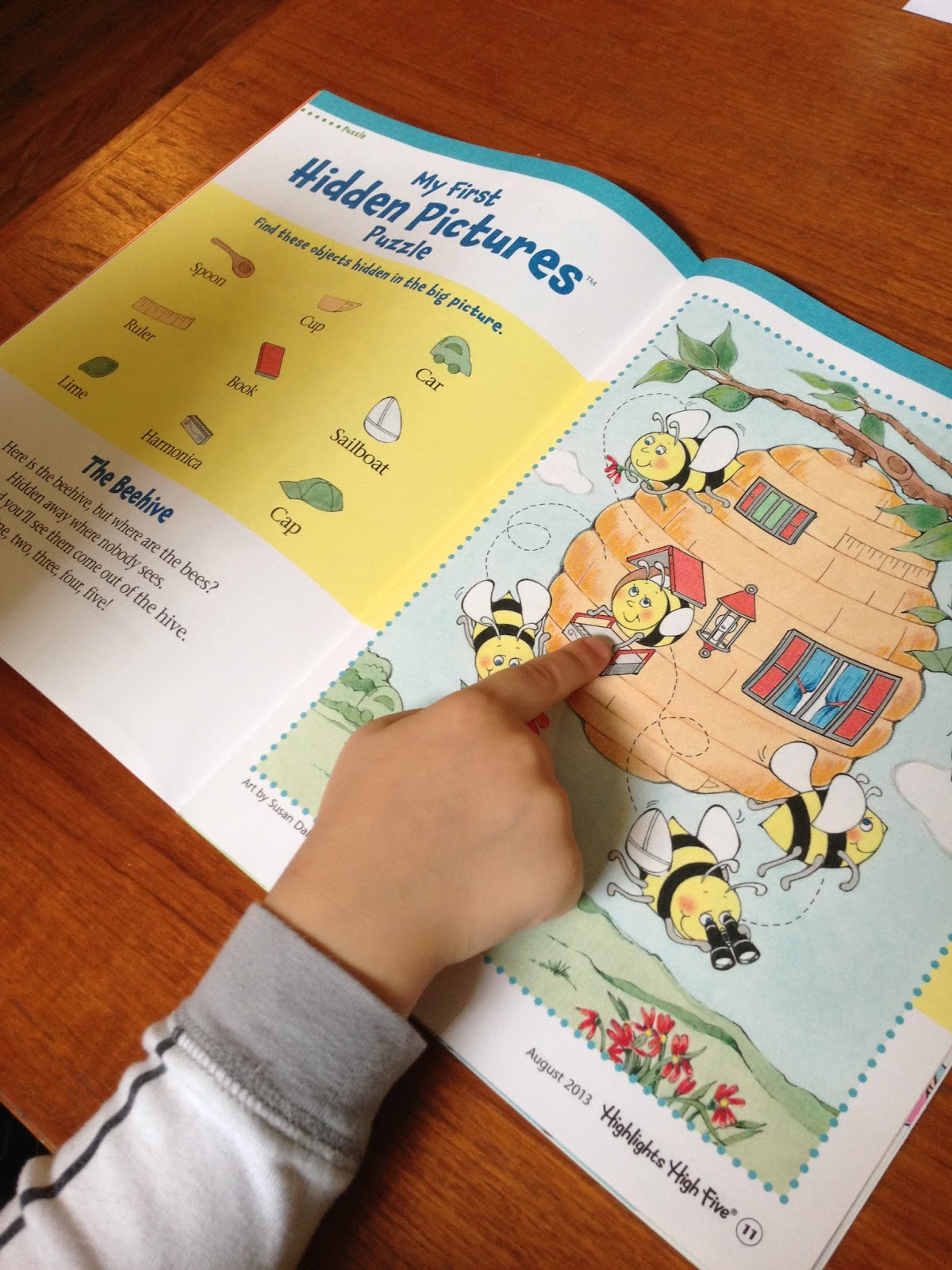
I really enjoy using newspapers and magazines to target inferencing, main idea, vocabulary, and listening comprehension goals for my older students. I know that you can download newspaper and magazine apps these days, but I really love actual magazines and newspapers.  I prefer to read the "old fashioned way". My lovely Aunt Nancy ordered my 5 year old son a subscription to Highlights magazine for Children. He receives the "High Five" version, geared toward 3-6 year olds. I love sitting down with him and reading the magazine together. We enjoy doing every puzzle, finding every hidden picture, and reading all of the cute stories. After my son has read it cover to cover, I save it to use in the speech room! This magazine really is a fantastic therapy tool!


Here are just a few of the ways I use Highlights in my sessions:

- Read the short stories and ask comprehension questions
- Select pictures for students to describe
- Using the Hidden Pictures section to work on vocabulary. I provide a starter sentence "I see a _________" and the student has to say the sentence as they find the picture. We can then discuss what the item is used for, etc.
- Comparing and contrasting - there is usually a section that has two pictures side by side and the students have to pick out what is different
- Find pictures in the magazine that contain a certain sound
- The "That's Silly" section of the magazine is great for reasoning skills. It gives the students an opportunity to explain why something is silly or why it does/doesn't belong in the scene.

Here are a couple more pictures of my son enjoying Highlights:


Another great subscription my son has is Ranger Rick Jr. The pictures are just fantastic and it is filled with fun animal facts. I have already swiped my son's September issue since I plan on doing a lot of squirrel-themed activities this fall! I love squirrels. And fall. And magazines.


I am thinking about using some of my school money to buy a subscription to another children's magazine. Any suggestions?

Wednesday, August 28, 2013

Eliciting /k/ and /g/

When it comes to eliciting sounds that a child is not stimulable for, /k/ and /g/ can be tricky because they are hard to see. That said, I have had pretty good luck so far using the following techniques:

- Have the child cough 
- Have the child gargle water
- Using a mirror to increase awareness of tongue placement
- Have the child lay on their back 

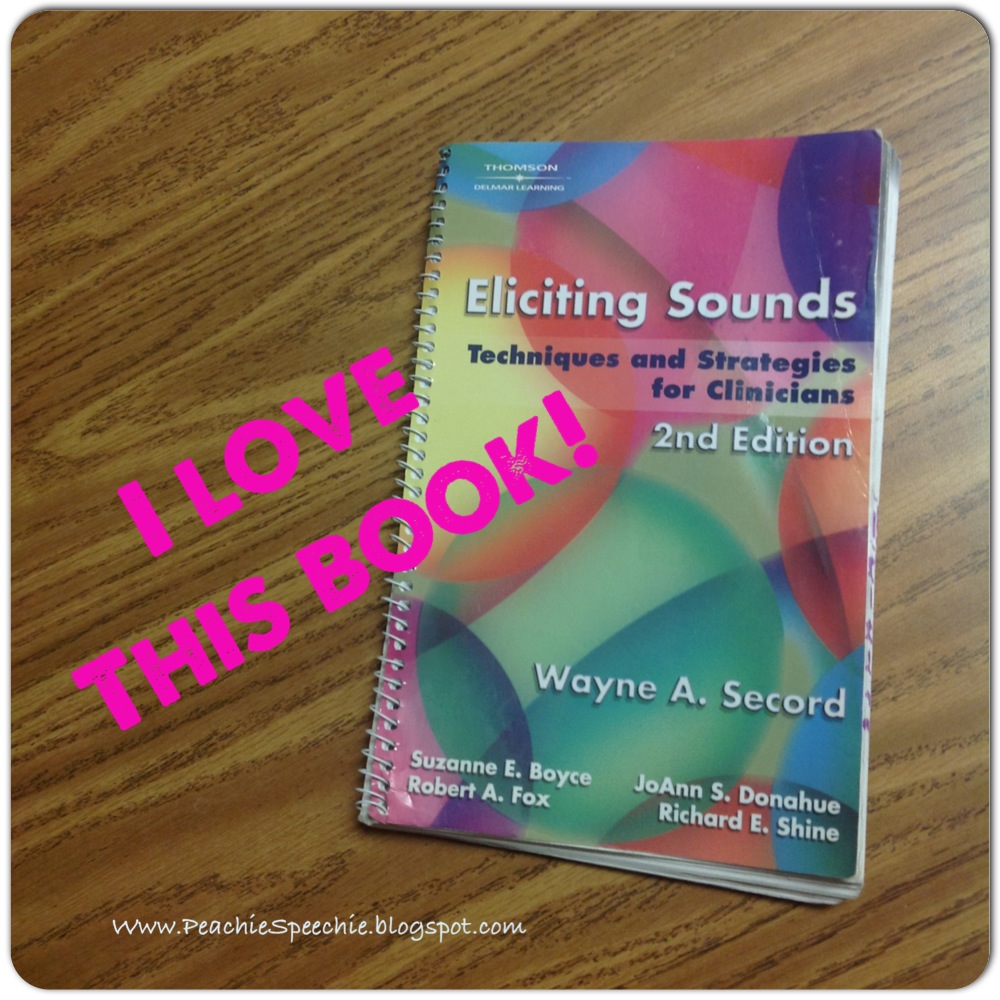
By the way, if you are an SLP and you don't have Wayne Secord's Eliciting Sounds book then you might want to ask your school system to buy it for you. It is the one book from grad school that I still refer to and keep with me in my speech room. 


If the above mentioned techniques don't work, I usually pull out a tongue depressor or a lollipop. 

I know that Dum Dums are popular with a lot of SLPs because they are small and can easily fit in little mouths. They come in so many flavors that they are sure to appeal to most children and they are relatively inexpensive. They work well for eliciting /k, g/  and I love using them but the ingredient list is just awful! So, I thought I would give the Trader Joes Organic Pops a try. They are a bit bigger than Dum Dums and honestly I don't love the shape because they are sort of wide so I might end up going back to the Dum Dums. For now, I have these:


The tongue depressor is skinny enough to get behind the teeth and works better than the organic lollipops. You can see in this picture how I am able to get better tongue elevation in the back with the depressor vs. the organic pop. 


 I usually set up the therapy mirror on the table and after a few trials of me holding the tongue depressor/lollipop, I have the student try to hold it themselves while saying /k/ in isolation or syllables. I made some blank lollipop cards (part of my Sweet Speech for /k/ and /g/ FREEBIE) and I give them a card for every correct production as a reinforcer. Sometimes I put a stack of them in the middle and for every correct production they get a card and for every incorrect production I get one. At the end, we count them up together (easy way to take data!). I also made some initial /k/ and /g/ word cards that I use and send home for homework. 


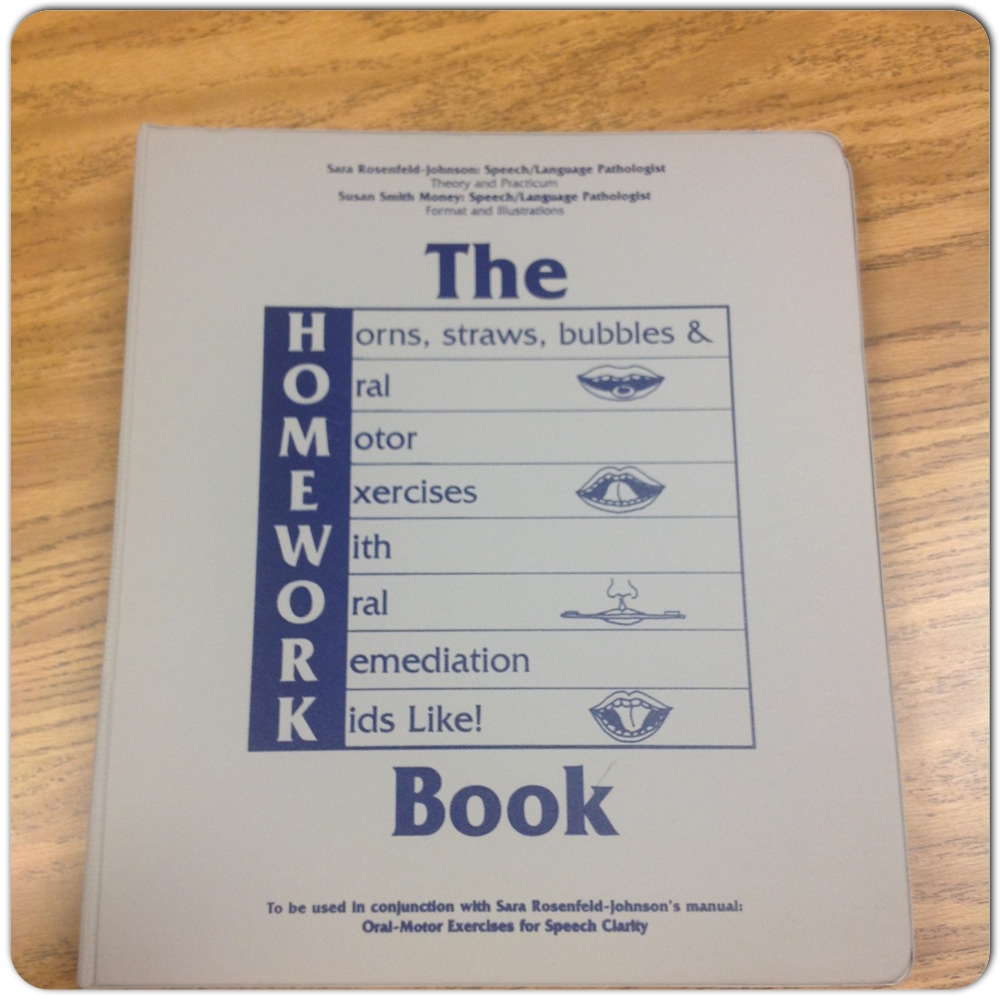
Another method I have been using for eliciting /k/ and /g/ is the cereal trick. I got the idea from Sara Rosenfeld-Johnson. This book of hers has a little drawing and explanation in it that I show the kids as I introduce the trick. 


Have the student put a Cheerio (or organic version of Cheerios at Whole Foods/Trader Joes!) inside the bottom of the lower front teeth with the tip of their tongue resting in the hole of the Cheerio. Instruct them to open their mouth slightly (while keeping their tongue and Cheerio in place!) and say the /k/ sound. If they say /t/ instead of /k/, then they will drop the Cheerio! It was hard to capture a picture of this but it seems to be pretty effective for teaching tongue placement.


I am interested to hear what works best for other SLPs when it comes to eliciting /k/ and /g/! Also, if anyone finds organic lollipops that have the awesome Dum Dum shape - let me know!!